
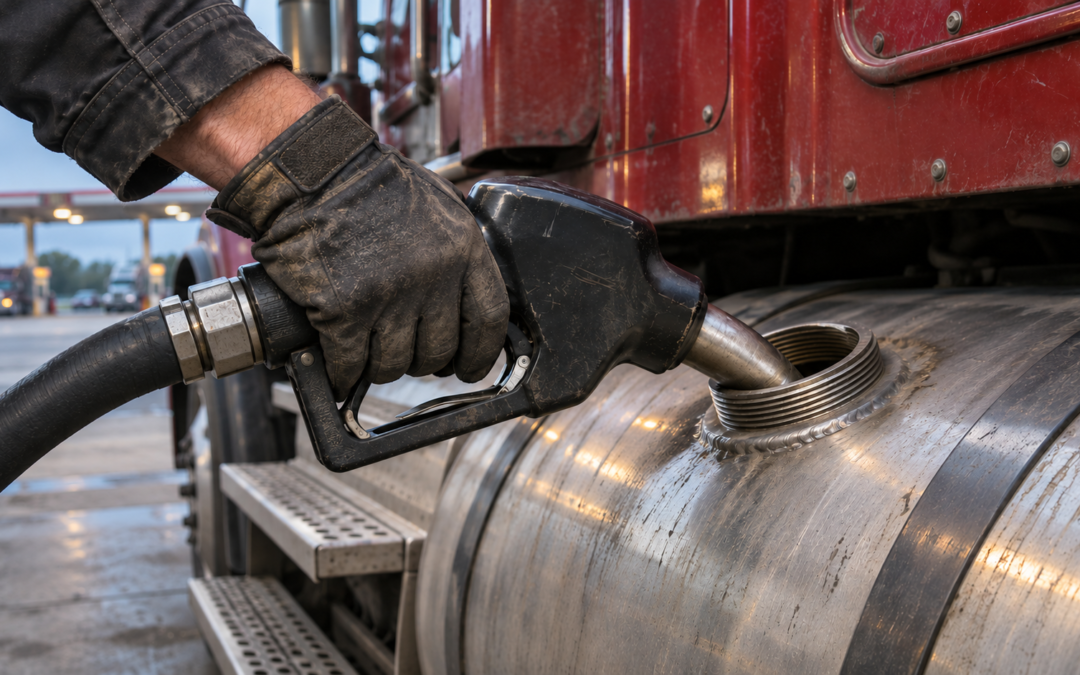
U.S. on-highway diesel fell 24.2 cents a gallon to $5.695 in the Energy Information Administration’s Nov. 23, 2026 reading. It was the fourth straight weekly decline. Diesel was still about $1.86 a gallon higher than a year earlier. At 7 mpg, the weekly drop took $34.57 off the estimated fuel bill for 1,000 miles. Add 43 empty miles at the lower price and the savings are gone. EIA weekly diesel history · EIA fuel price report
Run the same miles at both prices
Start with the same truck and the same 7 mpg for every mile in the example. There are 900 loaded miles and 100 empty miles already in the trip. Here’s what changes if the next pickup sends that truck another 43 miles empty.
| Run | Diesel price used | Estimated fuel bill |
|---|---|---|
| 1,000 miles at the Nov. 16 average | $5.937/gal | $848.14 |
| 1,000 miles at the Nov. 23 average | $5.695/gal | $813.57 |
| 1,043 miles at the Nov. 23 average | $5.695/gal | $848.56 |
Those 43 extra miles cost $34.98 in fuel at the lower price, before wear and time. Your empty mpg may be different from your loaded mpg. If you track them separately, price the loaded and empty miles separately. Include any extra fuel you expect to burn while stopped if it’s outside your mileage estimate.
Price the whole load while it’s still an offer
Say the load pays $2.70 per loaded mile, or $2,430 for 900 loaded miles. With the 100 empty miles already planned, that’s $2.43 in gross revenue per truck mile. If you need those 43 extra empty miles for the same money, you’re down to $2.33 per truck mile before expenses. If the extra move positions you for a better reload, price that next load with the empty move included. Count those miles once across the two loads.
Make the fuel stop earn the detour
The price that matters on the lane is the one you can actually buy at. Say a stop saves you 10¢ a gallon on a 100-gallon fill. That’s $10. At 7 mpg and $5.695 a gallon, a 15-mile round-trip detour uses about $12 in fuel before you put a price on the time. A driver sent to a designated stop can use the same math to explain the extra miles to dispatch. If you’re quoting the load, check whether the offered rate includes a surcharge before adding one to the revenue column.
Write down four numbers before you call back. Loaded miles, empty miles, your mpg and the fuel price you expect to pay. Divide the miles by the mpg and multiply by the price per gallon. That’s the fuel you’re buying to do the work. Now you can decide what the load needs to pay.